


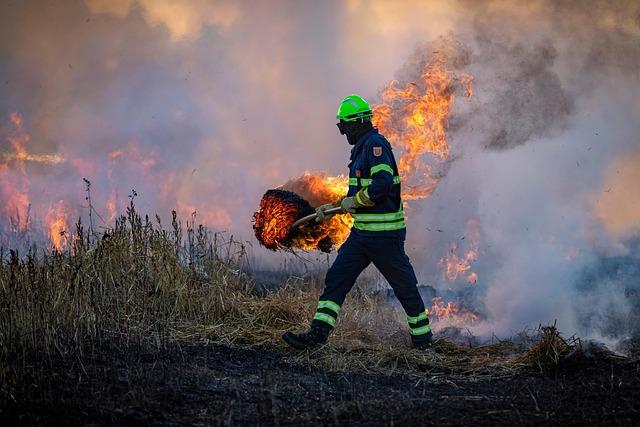
Wildfires have erupted across large swaths of southern Europe, with France and Spain bearing the brunt of the devastation. Exhausted firefighters are battling relentless blazes that have scorched thousands of hectares, forcing widespread evacuations and straining emergency resources to their limits. As temperatures soar and dry conditions persist, authorities face mounting challenges in containing the rapidly spreading fires, highlighting the growing threat of climate-driven disasters in the region.
Wildfires Rage Across France and Spain Testing Firefighting Resources
Blistering heatwaves and strong winds have fueled a series of uncontrollable fires, pushing emergency services in France and Spain to their limits. Firefighters, many working around the clock, face grueling conditions as vast swaths of forest and farmland are engulfed in flames. The unprecedented scale of the blazes has led to declarations of crisis in several regions, forcing thousands to evacuate and overwhelming local firefighting capabilities. Coordination between national and regional units is critical as resources, including aerial support and ground crews, are stretched thin across multiple fronts.
Key challenges responders face include:
- Rapidly shifting fire lines due to unpredictable winds
- High temperatures causing dehydration and exhaustion among crews
- Limited availability of firefighting aircraft as multiple fires demand simultaneous aerial response
- Evacuation logistics impacting fire control operations
| Region | Active Fires | Evacuations | Firefighting Units Deployed |
|---|---|---|---|
| Occitanie, France | 14 | 3,500 | 420 |
| Andalusia, Spain | 18 | 4,200 | 510 |
| Provence-Alpes, France | 9 | 2,000 | 300 |
Challenges Facing Exhausted Firefighters Amid Record-Breaking Blaze Intensity
Exhaustion and adverse conditions are pushing firefighting crews in France and Spain to their physical and mental limits. The unprecedented blaze intensity, fueled by extreme heatwaves and prolonged drought, has resulted in relentless operational demands. Many firefighters face extended shifts with minimal rest, battling unpredictable wind patterns that rapidly shift fire fronts. The strain on their endurance is compounded by limited access to water sources and rugged terrain that restricts the deployment of heavy machinery.
Key challenges confronted by firefighters include:
- Severe dehydration and heat exhaustion risks
- Communication breakdowns amid chaotic fire lines
- Equipment wear and frequent technical failures
- Scarce reinforcements due to simultaneous fire outbreaks
- Psychological stress from witnessing large-scale devastation
| Factor | Impact | Response |
|---|---|---|
| Heatwaves | Raised fire intensity | Hydration protocols & cooling stations |
| Remote locations | Delayed support arrival | Aerial water drops & UAV coordination |
| Equipment fatigue | Increased failure rates | Rapid maintenance teams |
Environmental and Community Impact of the Devastating Wildfires
The recent wildfires in France and Spain have inflicted severe damage on local ecosystems, with vast swaths of forests and wildlife habitats reduced to ashes. The immediate loss of flora and fauna not only disrupts biodiversity but also threatens the delicate balance of the regional environment. Soil erosion and water contamination are emerging problems as burned vegetation fails to hold the soil in place, leading to increased runoff and sedimentation in nearby waterways.
- Destruction of native species habitats leading to long-term ecological imbalance
- Increased air pollution from smoke and particulate matter worsening public health
- Loss of carbon-sequestering vegetation, contributing to climate change
Communities in the affected areas are grappling with profound social and economic hardships. Many residents have been forced to evacuate, with some losing homes and livelihoods as agriculture and tourism industries face uncertainty. Emergency services continue to work tirelessly, yet the psychological toll on firefighters and citizens alike is palpable, raising concerns about future preparedness and resilience.
| Impact Area | Effects |
|---|---|
| Health | Respiratory issues spike due to poor air quality |
| Economy | Tourism declines by up to 40% in affected regions |
| Infrastructure | Damage to roads and power lines delays recovery |
Strategic Recommendations for Strengthening Fire Prevention and Emergency Response
Enhancing early detection systems is crucial to mitigate the devastating impact of wildfires. Investment in advanced satellite surveillance and drone technology can provide faster and more accurate identification of fire outbreaks, allowing emergency services to mobilize swiftly. Additionally, community-based fire watch programs, paired with public awareness campaigns, can empower residents living in high-risk zones to report potential fire hazards immediately. Integrating these systems with real-time data analytics enhances decision-making capabilities for firefighting units on the ground.
Improving inter-agency coordination and resource allocation is equally vital. Establishing centralized command centers that unify firefighting teams across borders ensures optimal deployment of personnel and equipment, especially during peak wildfire seasons. Governments should also implement regular joint training exercises to streamline communication and cooperation between emergency responders. The table below summarizes key focus areas and action points to strengthen fire prevention and emergency response frameworks:
| Focus Area | Action Points |
|---|---|
| Early Detection | Satellite monitoring, drones, community alerts |
| Public Engagement | Education programs, fire watch networks |
| Resource Coordination | Cross-border command centers, joint drills |
| Infrastructure | Fire-resistant barriers, improved evacuation routes |
In Retrospect
As wildfires continue to scorch vast areas of France and Spain, the bravery and endurance of firefighters remain critically tested. With resources stretched thin and conditions worsening, authorities face mounting challenges in containing these blazes. The ongoing crisis not only highlights the urgent need for enhanced fire management strategies but also underscores the broader impacts of climate change on vulnerable regions. Continued vigilance and international cooperation will be essential as firefighters strive to protect communities and natural landscapes from further devastation.