




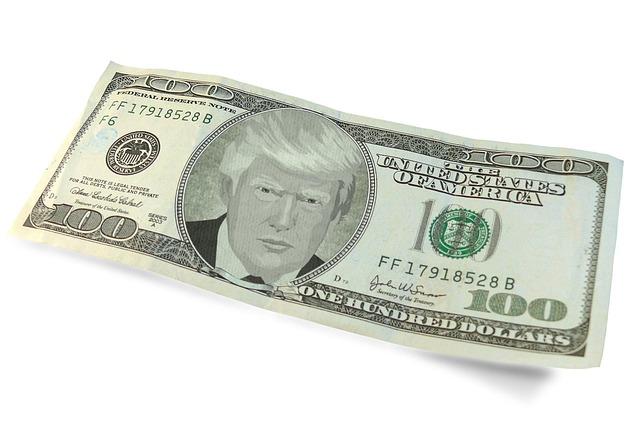
In a recent discussion that has sparked considerable debate, questions have arisen regarding former President Donald Trump’s authority to unilaterally halt all trade between the United States and Spain. As trade relations play a crucial role in global economics, understanding the extent of presidential power in this domain is essential. The Detroit News delves into the legal frameworks and political realities surrounding this issue, examining whether such a dramatic move falls within the president’s constitutional and executive powers or if it requires broader governmental approval.
Trump’s Authority Over International Trade and Its Legal Limits
Under the U.S. Constitution, the President holds significant sway over international trade practices, primarily through the authority to negotiate trade agreements and impose tariffs as a measure of national security or economic interest. However, this power is not absolute and is subject to legal and legislative boundaries. For instance, while executive orders can quickly alter trade policies, comprehensive trade prohibitions, such as a full embargo, typically involve Congressional approval to ensure a balanced approach reflecting broader national interests.
The limits of presidential authority in this arena are reinforced by the following key legal frameworks:
- Trade Expansion Act of 1962: Grants the President power to adjust tariffs but within defined parameters and requires consultation with Congress.
- International Emergency Economic Powers Act (IEEPA): Allows the President to regulate commerce after declaring a national emergency, yet with oversight and legal challenges possible.
- Congressional Trade Authorities: Congress retains power to approve or reject trade deals and regulates import/export laws through legislation.
| Authority | Scope | Limitations |
|---|---|---|
| Presidential Executive Orders | Rapid trade policy adjustments | Subject to judicial review and Congressional resistance |
| Congressional Legislation | Trade agreements and embargo laws | Requires presidential signature or override of veto |
| International Agreements | Binding trade commitments | Negotiated with foreign governments, limiting unilateral action |
Historical Precedents of U.S. Trade Restrictions with Foreign Nations
Throughout American history, economic measures such as trade restrictions have been employed as tools of foreign policy, often in response to geopolitical tensions or national security concerns. Notable examples include the 1807 Embargo Act, which halted all American exports to foreign nations in an effort to pressure Britain and France during the Napoleonic Wars. Later, the Smoot-Hawley Tariff of 1930 raised U.S. tariffs to unprecedented levels, aiming to protect domestic industries during the Great Depression but ultimately sparking retaliatory tariffs across the globe. These instances illustrate the government’s ability to significantly control trade flows, though not without broad economic consequences.
More recently, trade restrictions have evolved into complex frameworks involving tariffs, sanctions, and import regulations. The Trump administration, for instance, introduced sweeping tariffs targeting China and other key trading partners, leveraging economic pressure in pursuit of renegotiated trade deals. While the power to impose and enforce trade barriers lies primarily with Congress and the executive branch together, the president can act swiftly under specific statutory authorities, such as the International Emergency Economic Powers Act (IEEPA). However, complete cessation of trade with a nation like Spain would represent an unprecedented move—both legally and diplomatically—and would likely require legislative backing to withstand domestic and international scrutiny.
| Trade Restriction | Historical Period | Purpose | Outcome |
|---|---|---|---|
| Embargo Act | 1807-1809 | Neutrality enforcement vs. Britain/France | Economic downturn, policy repeal |
| Smoot-Hawley Tariff | 1930 | Protect U.S. industries during Depression | Global trade retaliation |
| IEEPA Sanctions | Modern era | National security and foreign policy | Targeted economic pressure |
- Legislative role: Congress holds the power to regulate international commerce and impose trade embargoes.
- Executive authority: The president can declare emergencies and enact sanctions under specific laws.
- Diplomatic impact: Trade restrictions can strain alliances and provoke retaliatory measures.
Potential Economic Impact of Cutting Off Trade with Spain
The immediate consequence of severing trade ties with Spain would be a significant disruption in supply chains that underpin various industries in both nations. The United States imports a range of goods from Spain, including automotive parts, pharmaceuticals, and luxury food products, while exporting machinery, agricultural products, and technology. Such a move would likely result in increased costs for manufacturers and consumers alike, as businesses scramble to find alternative suppliers or absorb the price surges caused by scarcity.
Economic analysts warn that the ripple effects could extend beyond direct trade relations. Potential repercussions include:
- Job losses in export-dependent sectors across both countries.
- Reduced foreign investment due to heightened market uncertainty.
- Negative impacts on multinational companies with operations in both the U.S. and Spain.
| Sector | Estimated Trade Volume (2023) | Potential Impact |
|---|---|---|
| Automotive | $5.2B | Supply chain delays, cost hikes |
| Pharmaceuticals | $2.8B | Drug shortages, increased prices |
| Agriculture | $1.4B | Export losses, market volatility |
| Technology | $3.1B | R&D disruptions, investment pullback |
Strategic Alternatives for Managing U.S.-Spain Trade Relations
Amidst escalating tensions and rhetoric, the question of power in U.S. trade relations with Spain hinges on multifaceted legal and political frameworks. The President’s authority to unilaterally “cut off all trade” is bounded by international agreements, Congressional oversight, and economic realities. Trade embargoes or sanctions typically require justification such as national security concerns or violations of international law, and are often subject to judicial and legislative scrutiny. Moreover, disrupting trade ties with a key European ally like Spain would trigger significant economic repercussions, both for American industries dependent on Spanish markets and for broader transatlantic partnerships.
To navigate these complexities, policymakers are exploring strategic alternatives that balance assertiveness with diplomacy. Key options under consideration include:
- Targeted tariffs: Imposing specific duties on select Spanish imports to protect U.S. economic interests without a full trade shutdown.
- Negotiated agreements: Recalibrating trade terms through bilateral talks to address contentious issues such as automotive standards and energy cooperation.
- Investment in domestic industries: Strengthening U.S. manufacturing and innovation to reduce dependency on Spanish imports.
| Strategic Alternative | Potential Impact | Implementation Complexity |
|---|---|---|
| Targeted Tariffs | Moderate economic leverage | Medium |
| Negotiated Agreements | Long-term relationship stability | High |
| Domestic Investment | Reduced import reliance | Medium to High |
Closing Remarks
In conclusion, while the president of the United States holds considerable authority over trade policies, including the ability to impose sanctions or adjust tariffs, the power to entirely “cut off all trade” with a country like Spain faces significant legal, economic, and diplomatic constraints. Such a drastic move would require navigating complex legislative frameworks, international agreements, and potential repercussions that extend beyond executive reach alone. Understanding these limitations is crucial in evaluating claims about presidential powers and the realistic scope of U.S. trade actions.


